How Do AI Agents Take Action Unlike Chatbots?
Simple chatbots respond to one input at a time and stop there. AI agents plan, execute multi-step tasks, use external tools, and loop back on their own results. The gap between them is the difference between a calculator and an employee.
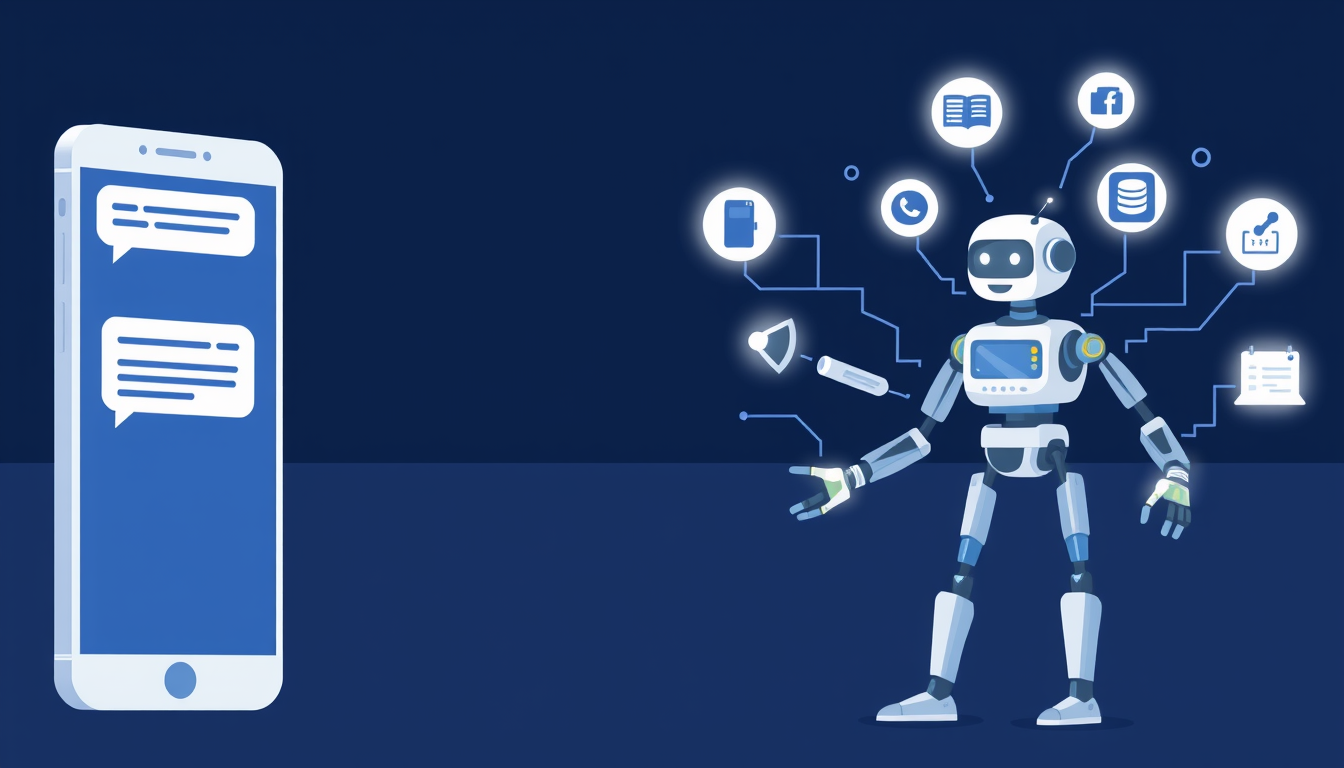
Simple chatbots respond to a single user message and wait for the next prompt — they have no memory, no tools, and no ability to take action. AI agents autonomously plan and execute sequences of tasks, use external tools like web search or code execution, and self-correct until a goal is achieved. The core difference is reactivity versus autonomous goal-directed behavior.
Chatbots React; AI Agents Act Autonomously
A traditional chatbot operates on a request-response loop: you send a message, it returns text, the interaction ends. It holds no persistent state and takes no independent action. It cannot browse the web, run code, write to a file, or trigger an API call on its own. An AI agent, by contrast, receives a goal and then decides what steps to take to reach it. It can break that goal into subtasks, execute each one using available tools, evaluate the results, and adjust its plan mid-task. This loop — plan, act, observe, revise — is called the ReAct cycle (Reasoning + Acting). GPT-4-based agents using frameworks like LangChain or AutoGPT operate this way. The practical implication is significant: a chatbot tells you how to send an email; an AI agent drafts, schedules, and sends it without further input from you.
AI Agents Use Tools and Memory; Chatbots Do Not
Tool use is the clearest technical dividing line. AI agents connect to external systems — web browsers, databases, code interpreters, APIs, calendars, and file systems — and use them actively during task execution. A chatbot's knowledge is frozen at its training cutoff and limited to text output. Memory is the second major distinction. Most chatbots reset between sessions; each conversation starts blank. Agents can maintain short-term memory within a task (storing intermediate results) and long-term memory across sessions (storing user preferences or past outcomes in a vector database). This makes agents genuinely stateful. They know what they did last time, what worked, and what failed. For bloggers and business users, this means an agent can manage an ongoing content pipeline — remembering which topics were covered, which drafts are pending, and which posts performed well — without being told each time.
Multi-Step Planning Separates Agents From Chatbots
Chatbots handle single-turn or limited multi-turn conversations. They are optimized for dialogue, not task completion. Ask a chatbot to research a topic, write an article, optimize it for SEO, and schedule it — it will answer each instruction separately when prompted. An AI agent handles that same workflow as a single goal. It spawns subtasks, assigns them sequentially or in parallel, checks outputs against success criteria, and loops back when something fails. This is called agentic behavior. Tools like OpenAI's Assistants API, Anthropic's Claude with tool use, and open-source frameworks like CrewAI enable this architecture. Agents can also call other agents — a coordinator agent delegates to specialist sub-agents for research, writing, and publishing. No chatbot operates at this level of orchestration. The result is automation that mirrors how a skilled human worker approaches a complex project, not how a help desk responds to a ticket.
Key Takeaways
- Chatbots are reactive; AI agents are proactive and goal-directed.
- AI agents use external tools like browsers, APIs, and code runners; chatbots output text only.
- Agents maintain memory across steps and sessions; most chatbots reset every conversation.
- AI agents plan multi-step task sequences and self-correct; chatbots handle one prompt at a time.
- Agentic frameworks like LangChain, CrewAI, and OpenAI Assistants API enable agent behavior that no chatbot can replicate.
FAQ
Q: Can a chatbot become an AI agent with the right prompting?
A: Prompting alone cannot turn a chatbot into an agent — tool access and an execution loop must be built into the system architecture. Without the ability to call external tools and act on results, the model remains reactive regardless of how it is prompted.
Q: Are AI agents more expensive to run than chatbots?
A: Yes, because agents make multiple LLM calls per task and consume tool-use API credits across each step. A single agentic workflow can cost 5–20x more in API fees than a single chatbot response, so cost management through task scoping and model selection is essential.
Q: What happens when an AI agent makes a mistake mid-task?
A: Well-designed agents include error-handling loops that detect failed steps, retry with a revised approach, or escalate to a human checkpoint. Without these guardrails, an agent can compound errors across steps, which is why human-in-the-loop checkpoints remain best practice for high-stakes workflows.
Conclusion
AI agents and chatbots solve fundamentally different problems: chatbots handle conversation, agents handle work. The shift from reactive text output to autonomous multi-step execution is the most consequential capability jump in practical AI right now. If you want to move beyond answering questions and start automating real workflows, understanding this distinction is the necessary first step.
Related Posts
- How Do AI Agents Differ From Simple Chatbots?
AI agents autonomously plan, reason, and take actions across tools and systems, while simple chatbots follow scripted rules or respond to individual prompts without memory or goal-driven behavior. The difference comes down to autonomy, persistence, and the ability to execute multi-step workflows. - How Do Technical SEO Mistakes Kill Blog Traffic?
The technical SEO mistakes that bleed the most traffic are ones bloggers rarely see: slow Core Web Vitals, crawl budget waste, and uncanonicalised duplicate content. These aren't edge cases—they actively suppress rankings every single day. Fix them once and the traffic gains are immediate and compou - How Long Does It Take to Set Up AI Blog Automation?
A basic AI blog automation system takes 2-8 hours to configure. Advanced systems with custom workflows, SEO integration, and quality controls require 1-4 weeks. Your timeline depends entirely on complexity, tool selection, and content standards.