How Does E-E-A-T Impact Your Google Rankings?
E-E-A-T stands for Experience, Expertise, Authoritativeness, and Trustworthiness — the four signals Google uses to decide if your content deserves to rank. It's not a direct algorithm score, but it shapes how quality raters and Google's systems evaluate your site. Blogs that visibly demonstrate real
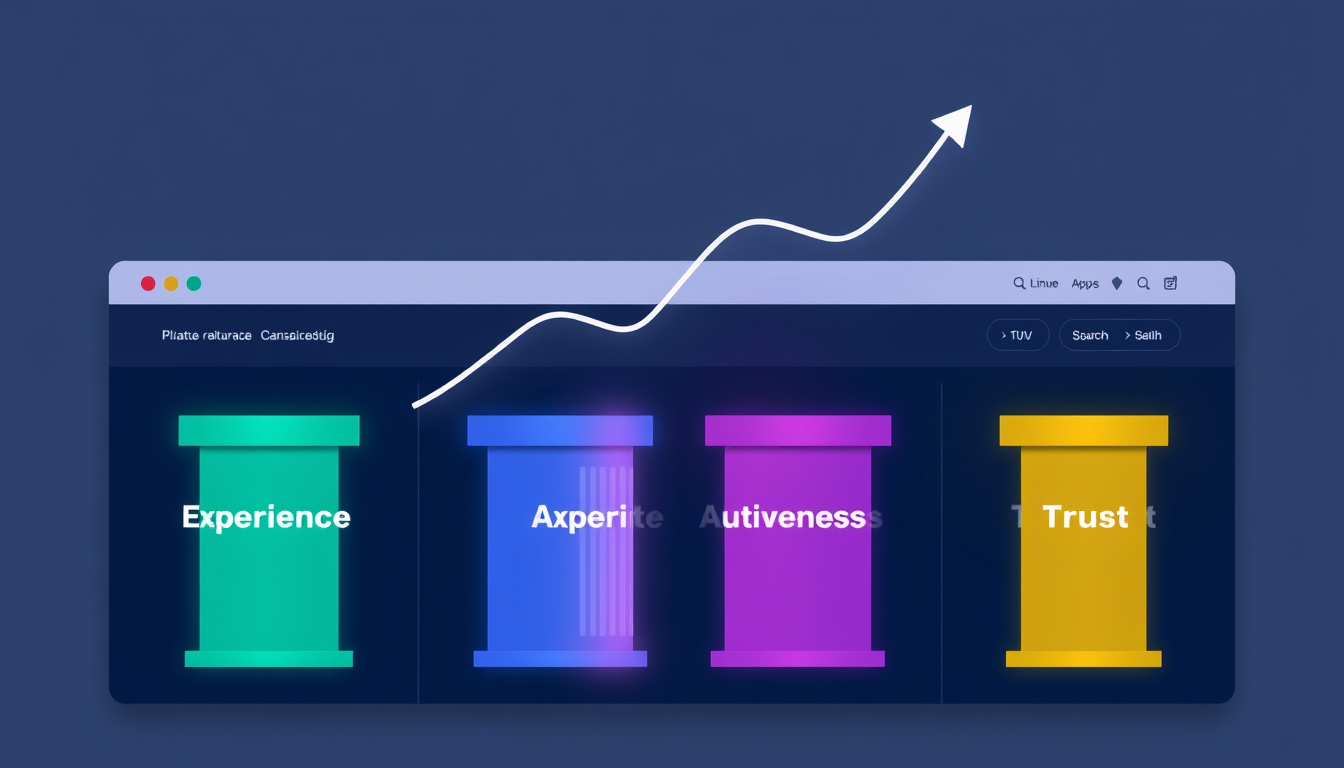
E-E-A-T stands for Experience, Expertise, Authoritativeness, and Trustworthiness — a framework from Google's Search Quality Rater Guidelines that defines what high-quality content looks like. Google added the first 'E' (Experience) in December 2022, specifically rewarding content written by people with firsthand, real-world knowledge of the topic. While E-E-A-T isn't a single ranking score you can check in Search Console, sites that demonstrate strong E-E-A-T signals consistently rank higher and survive algorithm updates that punish generic, thin content.
What E-E-A-T Actually Means and How Google Measures It
Google's 175,000+ human quality raters use the E-E-A-T framework to score pages, and those scores train the ranking algorithms. Here's what each signal means in practice: Experience means the author has personally done the thing they're writing about — a hiking blogger who has climbed the trail, not someone who summarized Wikipedia. Expertise is demonstrated subject-matter knowledge, especially critical in YMYL (Your Money or Your Life) categories like health, finance, and legal topics. Authoritativeness is your reputation in your niche — do credible sites cite you? Do you have brand mentions from recognized publications? Trustworthiness covers site security (HTTPS), accurate contact information, transparent authorship, and honest content. Of the four, Google's own documentation calls Trust the most critical, because a trusted site can be authoritative, but an untrustworthy one undermines every other signal. For bloggers, the fastest signal to improve is Experience — simply adding first-person proof, original photos, test results, or dated personal anecdotes to existing posts can shift how Google's systems evaluate them.
How to Build E-E-A-T Signals That Google Can Actually Detect
Focus on these five concrete actions, ranked by impact: First, create detailed author bio pages with credentials, social profiles, LinkedIn links, and a clear niche focus — Google needs to attribute content to a real, verifiable person. Second, add first-person experience markers to posts: specific dates, personal outcomes, photos you took, or products you actually tested. Third, earn backlinks from topically relevant, authoritative domains — one link from a recognized industry site outweighs 50 links from random directories. Use Ahrefs or Semrush to audit your referring domains and identify link gaps. Fourth, build a consistent topical authority cluster — covering 15-20 deeply related subtopics on one subject signals subject-matter expertise far more than scattered content across unrelated niches. Fifth, add schema markup (Author, Article, Review) to help Google parse who wrote your content and why it's credible. Most bloggers skip schema — it's a low-competition trust signal you can implement today via a free plugin like Rank Math or Schema Pro.
E-E-A-T Mistakes That Quietly Kill Your Rankings
The most damaging mistake is publishing content without visible authorship — anonymous posts with no byline, no bio, and no verifiable author identity are exactly what Google's Helpful Content systems penalize. The second biggest mistake is writing about topics outside your demonstrated niche. If your blog covers fitness but suddenly publishes financial advice, that mismatch weakens your topical authority score. Third, avoid over-reliance on AI-generated content that contains no original data, personal perspective, or lived experience — it fails the Experience signal by definition. To track your E-E-A-T progress, monitor these three metrics monthly: branded search volume (rising brand searches signal growing authority — check in Google Search Console under Queries), domain rating growth in Ahrefs, and click-through rates on target pages. A CTR above 5% for a top-10 position suggests users trust your brand enough to click, which reinforces authority signals. Timeframe expectation: meaningful E-E-A-T improvements typically show ranking impact within 3-6 months, not weeks — these are long-term trust signals, not quick fixes.
Key Takeaways
- E-E-A-T stands for Experience, Expertise, Authoritativeness, and Trustworthiness — Trust is the most foundational of the four signals.
- Google added 'Experience' in December 2022, specifically to reward content written by people with real, firsthand knowledge of the topic.
- Author bio pages with verifiable credentials are one of the fastest, most actionable E-E-A-T improvements any blogger can make today.
- Topical authority — deeply covering one niche with 15-20 related posts — builds Expertise signals faster than scattered multi-topic content.
- E-E-A-T improvements typically impact rankings within 3-6 months, so start building these signals now before your next content push.
FAQ
Q: Does E-E-A-T affect small or new blogs, or only big sites?
A: E-E-A-T affects every site, but new blogs feel it most in competitive YMYL niches like health and finance where Google defaults to established authorities. In lower-competition niches, a new blog with strong author credentials and original personal experience can rank within 3-4 months.
Q: Can AI-generated content have good E-E-A-T?
A: AI content can demonstrate Expertise if it's accurate, but it structurally fails the Experience signal unless a human expert adds original observations, personal data, or real-world testing. The safest approach: use AI to draft structure, then layer in firsthand experience before publishing.
Q: What if I'm a generalist blogger covering multiple topics — does that hurt E-E-A-T?
A: Yes, significantly — broad generalist sites struggle to build topical authority because Google can't attribute deep expertise to any single subject. Consider organizing content into clear topic clusters or separate category hubs, and assign distinct author bios with relevant credentials to each niche area.
Conclusion
E-E-A-T is Google's way of answering one question: can this content be trusted to help a real person? Blogs that visibly demonstrate who wrote the content, why they're qualified, and what real experience backs it up will consistently outperform anonymous, generic competitors. Your single most important next step: audit your top 10 posts today and add a detailed author bio, at least one first-person experience marker, and Author schema markup to each one.
Related Posts
- How to Rank on Google's First Page Free?
You can reach Google's first page without paying a cent — but it requires targeting the right keywords, publishing genuinely useful content, and building authority through backlinks. Most bloggers fail because they skip the research phase and write whatever feels interesting. Strategy beats volume e - How Does Google's Helpful Content Update Affect You?
Google's Helpful Content Update targets blogs written primarily for search engines rather than real readers. Sites that rely on generic, thin, or AI-generated content without genuine expertise have seen dramatic ranking drops. Bloggers who demonstrate first-hand experience and depth are winning traf - How Do Technical SEO Mistakes Kill Blog Traffic?
The technical SEO mistakes that bleed the most traffic are ones bloggers rarely see: slow Core Web Vitals, crawl budget waste, and uncanonicalised duplicate content. These aren't edge cases—they actively suppress rankings every single day. Fix them once and the traffic gains are immediate and compou