How to Rank on Google's First Page Free?
You can reach Google's first page without paying a cent — but it requires targeting the right keywords, publishing genuinely useful content, and building authority through backlinks. Most bloggers fail because they skip the research phase and write whatever feels interesting. Strategy beats volume e
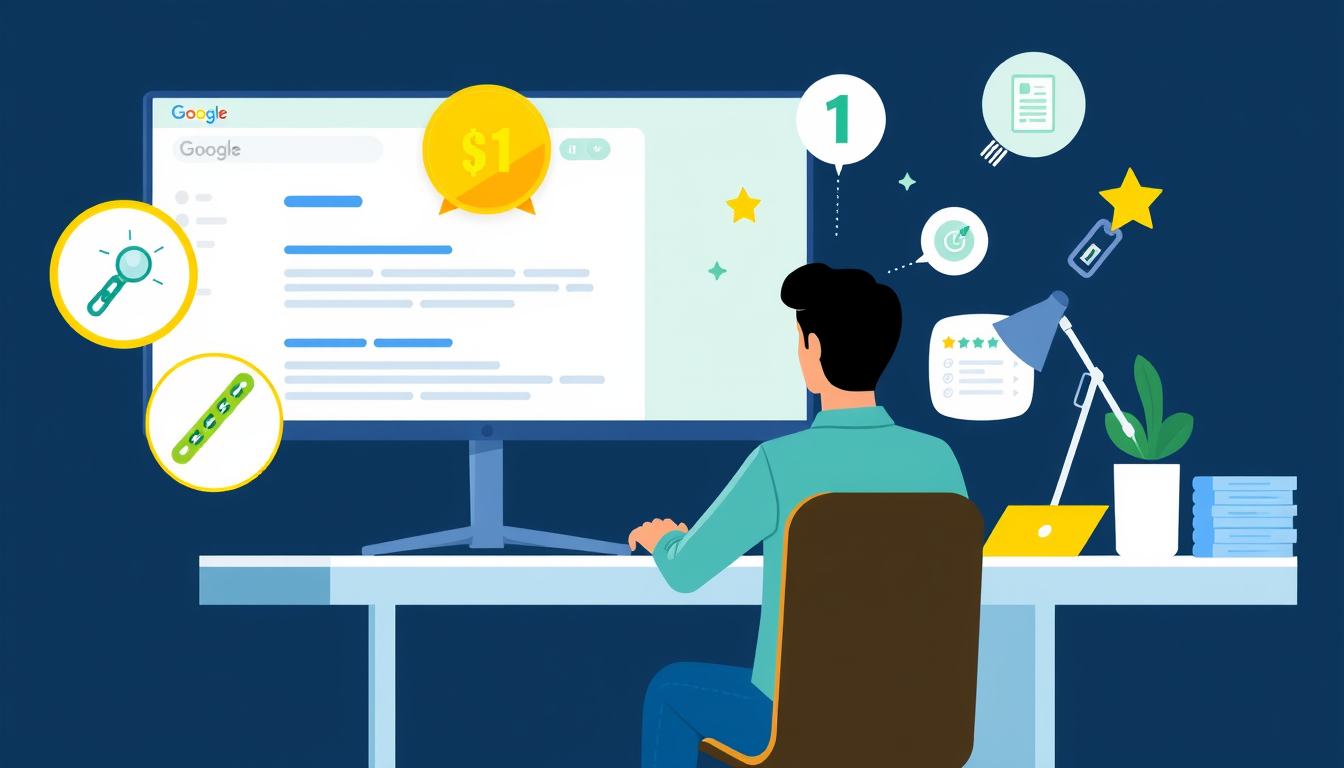
To rank on Google's first page without ads, you need to target keywords your site can realistically compete for, publish content that directly and completely answers the searcher's intent, and earn at least a handful of backlinks from relevant sites. Do all three consistently and you will rank — skip any one of them and you likely won't.
What Actually Gets You to Page One Without Paying Google
Google ranks pages that best satisfy search intent — not the ones with the biggest budgets. The honest insight most SEO guides bury: your biggest lever is keyword selection, not content volume. A new or mid-authority blog will never beat Forbes for 'best credit cards,' but it can absolutely outrank them for 'best credit cards for freelancers with irregular income.' That specificity is your free advantage. Start every piece of content with a keyword that has clear intent, measurable search volume (use Ahrefs' free tier, Ubersuggest, or Google Search Console), and a Keyword Difficulty score below 30 if your domain is under 12 months old. Once you have that target, write content that answers the query better, faster, and more completely than the current top results. Read the top three pages, identify what they miss, and fill that gap. That's the entire game — keyword fit plus content depth plus a few backlinks to confirm you're credible.
The Step-by-Step Free Ranking Playbook That Works in 2024
Follow this sequence for every post you publish. First, use Google's autocomplete and 'People Also Ask' boxes to find specific question-based keywords — these signal exactly what users want answered. Second, check the Search Engine Results Page (SERP) for that keyword: if you see Reddit threads and small blogs ranking, you have a real shot. Third, write a post that leads with the direct answer (in the first 100 words), uses the exact keyword in your H1, first paragraph, and one subheading, and runs 1,200–2,000 words for most topics. Fourth, add internal links to two or three related posts on your blog — this passes authority and keeps Google crawling. Fifth, reach out to three to five sites that link to similar content and pitch a guest post or resource mention. A single backlink from a DA 40+ site can move you from page two to page one within 60–90 days. Use Google Search Console weekly to track impressions and click-through rate — both are free, real-time signals of what's working.
Mistakes That Keep You Off Page One (And What to Track Instead)
The most common reason bloggers stall at page two or three is targeting keywords that are too competitive for their current domain authority. Writing great content for the wrong keyword is wasted effort — check your Domain Rating in Ahrefs or Moz before committing to any target. The second big mistake is ignoring click-through rate (CTR). You can rank in position six and still triple your traffic by rewriting your title tag and meta description to be more compelling — Google Search Console shows you exactly which pages have high impressions but low CTR, which is free money you're leaving on the table. Third, don't neglect page speed: a page that takes more than three seconds to load on mobile loses both rankings and readers. Test every post with Google PageSpeed Insights (free) before publishing. Track these three metrics weekly: impressions growth (are you getting seen?), average position movement (are you climbing?), and CTR percentage (are people clicking?). If impressions grow but position stalls, you need more backlinks. If position is good but CTR is low, fix your title tag today.
Key Takeaways
- Target keywords with a Difficulty score under 30 if your blog is under one year old — competition is the biggest predictor of whether you'll rank.
- Answer the search query directly in your first 100 words — Google rewards pages that satisfy intent fast, and so do readers.
- Even one backlink from a relevant DA 40+ site can push a page from position 12 to position 4 within 60–90 days.
- Use Google Search Console's Performance report weekly — it's free and shows you exactly which pages need better titles or more links.
- High impressions with low CTR means your title tag is the problem, not your content — fix it before publishing anything new.
FAQ
Q: How long does it realistically take to reach page one without ads?
A: For low-competition keywords (Difficulty under 20), expect 6–12 weeks from publication if your post is well-optimized and has at least one backlink. Higher-competition targets typically take 4–9 months even with good content and link-building.
Q: Do you need backlinks to rank on page one, or can great content alone do it?
A: For very low-competition keywords (Difficulty under 10), strong content can rank without backlinks — Google's own data confirms this for niche queries. For anything above that threshold, you need external links to confirm your authority to Google's algorithm.
Q: What if my blog is brand new — can I still rank on page one?
A: Yes, but only by targeting hyper-specific, long-tail keywords where the current top results are thin or off-topic — search for five-to-seven-word queries with under 500 monthly searches. New sites that try to rank for broad terms in the first six months almost always waste their effort.
Conclusion
Ranking on Google's first page without ads is a skill, not luck — and the skill is choosing winnable keywords, writing content that fully answers searcher intent, and systematically earning backlinks. The bloggers who crack page one consistently aren't publishing more than everyone else; they're publishing smarter. Start today by opening Google Search Console, finding your highest-impression post stuck on page two, and rewriting its title tag to match exactly what the searcher wants — that single change often delivers results within two weeks.
Related Posts
- How Does AEO Help Your Content Rank in AI Search?
Traditional SEO wins clicks by ranking pages. AEO wins citations by becoming the definitive answer AI engines quote directly. The shift is from visibility to authority — and the tactics are fundamentally different. - How Do Bloggers Rank in 2026? The Complete SEO Guide
SEO for bloggers in 2026 demands topical authority, structured content that AI engines can parse, and flawless technical foundations. This guide gives you the exact playbook—keyword research through link building—so you rank in both traditional and AI-powered search. - How Does Google's Helpful Content Update Affect You?
Google's Helpful Content Update targets blogs written primarily for search engines rather than real readers. Sites that rely on generic, thin, or AI-generated content without genuine expertise have seen dramatic ranking drops. Bloggers who demonstrate first-hand experience and depth are winning traf
Also on AI Future Lab
- Scientists Decode Hidden Brain Nutrient and Pain-Free Gene Mutations
Breakthrough discoveries reveal queuosine's role in brain protection and cancer fighting, plus genetic mutations that eliminate pain sensation entirely.