Why Is Vibe Coding Replacing Traditional Code Writing?
Traditional coding means learning a programming language and writing every line yourself — which takes months or years. Vibe coding means describing what you want in plain English and letting AI write the code for you. Both get to the same destination, but vibe coding is a completely different vehic
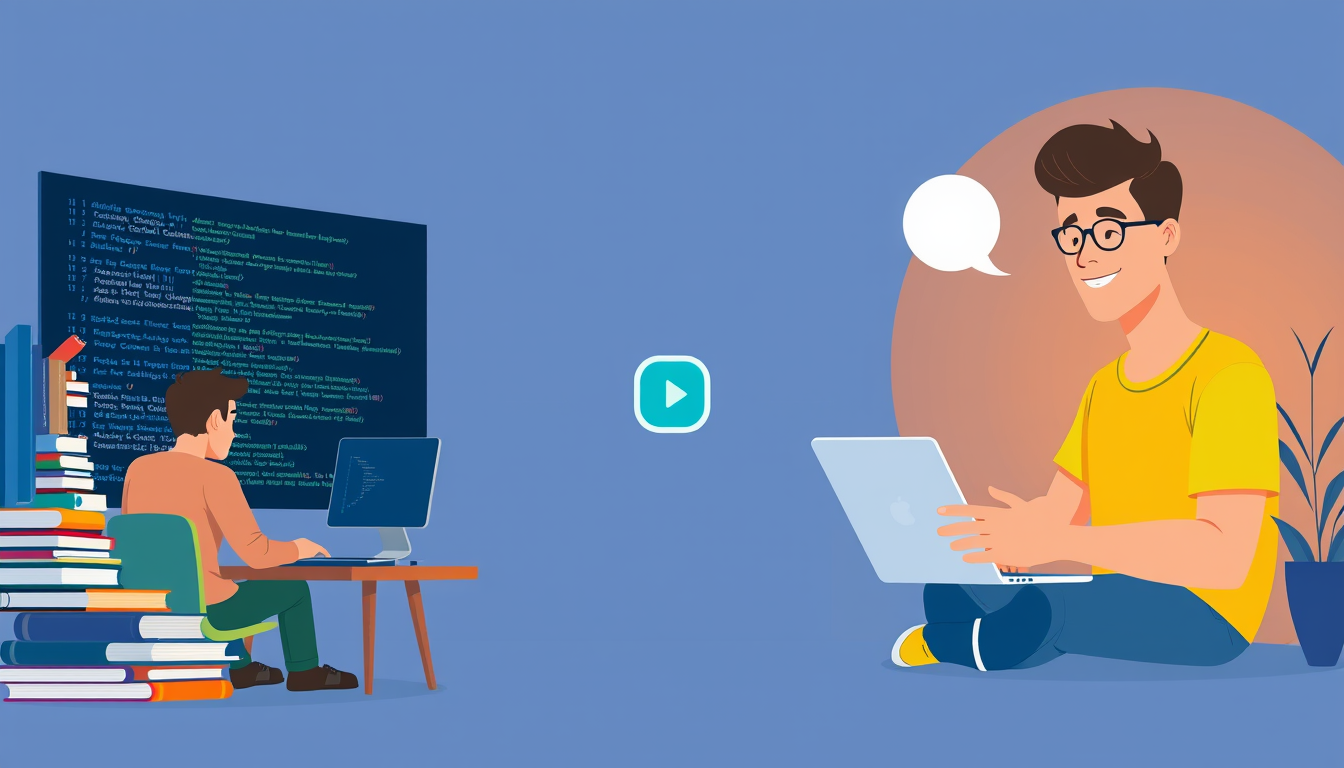
Traditional coding requires you to learn a programming language — like Python or JavaScript — and write every instruction the computer needs, one precise line at a time. Vibe coding lets you skip that by describing what you want in plain English, and an AI tool like Claude or ChatGPT writes the code for you. Think of it as the difference between building a house brick by brick versus telling an architect exactly what you want and watching them build it.
Traditional Coding vs. Vibe Coding: The Simple Analogy
Imagine you want a custom birthday cake. Traditional coding is like learning to bake from scratch — you study recipes, master techniques, buy the right tools, and practice for months before your cake looks decent. Vibe coding is like texting a professional baker: you describe exactly what you want ('chocolate sponge, three layers, blue frosting, says Happy Birthday') and they handle all the baking while you wait.
In traditional coding, you learn a programming language (a set of precise rules a computer understands), memorize its syntax (the exact spelling and grammar of those rules), and debug errors (fix mistakes) yourself. One missing semicolon can break everything. It is powerful and deeply satisfying — but it has a steep learning curve that takes most beginners 6–12 months before they feel comfortable.
In vibe coding, you type a plain-English description of your idea into an AI tool. The AI writes all the code behind the scenes. Your job is to describe, review, and guide — not to memorize syntax. This makes building real things possible from day one, even if you have never written a single line of code. Both approaches build real software. The difference is who writes the code.
How to Try Both Approaches Right Now: A Side-by-Side Walkthrough
Here is a quick exercise that shows the contrast immediately. You want to build a simple to-do list app.
**The Traditional Coding path:** 1. Choose a language (JavaScript is common for web apps). 2. Spend weeks learning variables, functions, loops, and HTML structure. 3. Write roughly 50–100 lines of code from memory. 4. Debug errors until it works — often hours of frustrating trial and error.
**The Vibe Coding path:** 1. Open Claude.ai or ChatGPT (free to start). 2. Type: 'Build me a simple to-do list web app. I should be able to type a task, press a button to add it to a list, and click a task to mark it done.' 3. The AI returns complete, working code in about 10 seconds. 4. Copy the code into a free tool like CodePen.io and click Run. Your app is live.
Did you just do step 4? Congratulations — you just shipped your first app. Seriously, that counts. The traditional path is not dead (learning fundamentals makes you a better vibe coder eventually), but vibe coding removes the barrier that stops most beginners before they ever build anything real.
The Most Common Mistake Beginners Make When Comparing the Two
The biggest trap beginners fall into is treating vibe coding and traditional coding as enemies — believing they must fully commit to one and ignore the other. They either spend a year learning syntax before building anything fun, or they vibe code without ever understanding what the AI is producing, which leads to confusion when something breaks.
Here is how to avoid that trap:
1. **Start with vibe coding to build confidence.** Get something working on day one. That momentum is real and it matters. 2. **Read the code the AI gives you.** You do not need to understand every line immediately, but ask the AI to explain one section at a time. Type: 'Explain this code to me like I am 12 years old.' 3. **Learn traditional concepts gradually and on-demand.** When you want to customize something the AI built, you will naturally want to understand it — that is the perfect moment to learn. 4. **Do not panic when AI code breaks.** Paste the error message back into the AI chat and say 'I got this error — how do I fix it?' Recovery is part of the process, not a sign of failure.
The developers having the most fun right now are doing both: vibe coding to move fast, and picking up traditional skills as curiosity grows.
Key Takeaways
- Traditional coding requires learning a programming language's syntax yourself before building anything; vibe coding lets you describe ideas in plain English from day one.
- Vibe coding does not mean zero understanding — reading and questioning the AI's output makes you significantly more effective over time.
- Both approaches produce real, working software; vibe coding simply removes the months-long barrier to your first working project.
- The fastest-growing beginners use vibe coding to build momentum first, then learn traditional coding concepts on-demand when curiosity strikes.
- When AI-generated code breaks, pasting the error message back into the AI chat is almost always all you need to fix it — no deep coding knowledge required.
FAQ
Q: Do I need to learn traditional coding if I use vibe coding?
A: Not at the start — you can build genuinely useful apps through vibe coding alone. However, picking up basic traditional concepts over time will help you give the AI better instructions and customize results more precisely.
Q: Is vibe coding considered 'real' coding by professional developers?
A: The industry is actively debating this, but the honest answer is: if it builds working software that solves real problems, it counts. Many professional developers now use AI assistance daily alongside their traditional skills.
Q: What if I want to eventually become a professional developer — should I skip vibe coding?
A: Do not skip it — use it as your on-ramp. Vibe coding helps you see what finished code looks like and builds genuine excitement, which makes learning traditional coding fundamentals feel purposeful rather than abstract.
Conclusion
The core difference is simple: traditional coding puts you in the driver's seat with full manual control, while vibe coding lets AI handle the mechanics so you can focus on your idea. Neither approach is cheating, and neither is a dead end — they are two lanes on the same road leading to the same place: working software that you built. Your single best next step right now is to open Claude.ai, type one sentence describing something small you wish existed, and see what the AI builds for you in the next 60 seconds.
Related Posts
- What Is Vibe Coding? A Complete Beginner's Guide
Vibe coding is a new way to build software by talking to AI in everyday language instead of writing traditional code. You don't need any programming experience to start. This guide walks you from zero to your first working project in minutes. - How Does Claude Code Build Apps Without Coding?
Claude Code is Anthropic's AI coding agent that lives inside your terminal and writes, edits, and runs code for you. You describe what you want to build in plain English, and Claude does the heavy lifting. Even with zero coding experience, you can have a working app in under an hour. - How Do Beginners Use Vibe Coding With AI?
Vibe coding is the practice of building real, working software by simply describing what you want to an AI in plain English. You don't need to memorize syntax or take a course first — you just need an idea and a willingness to experiment. It's the most beginner-friendly entry point into coding that